
The most dangerous part of war isn’t always the missile — it’s the story.
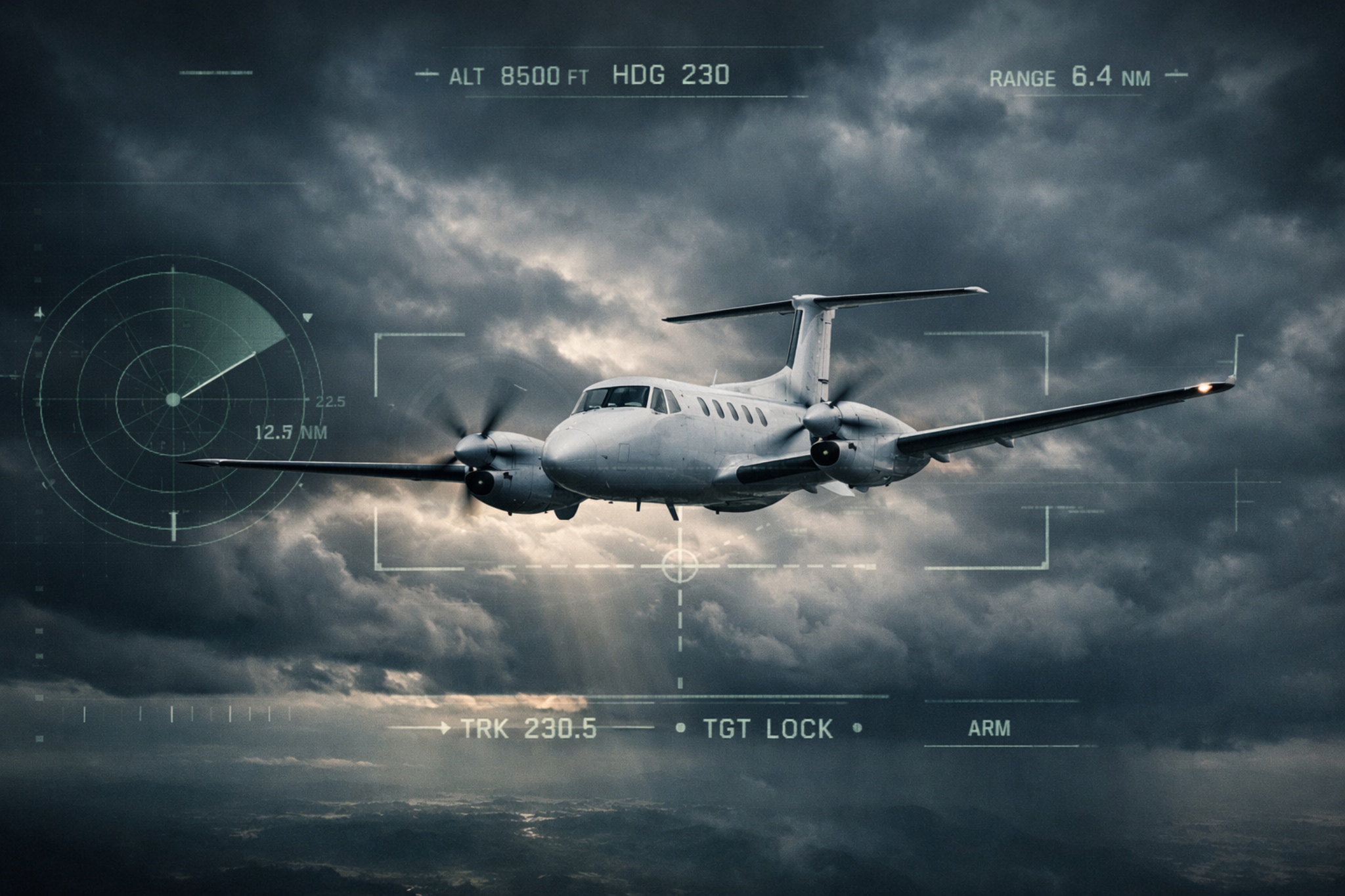
This week’s “wait… what?” headline: reporting says a U.S. aircraft used in a deadly strike off Venezuela’s coast was painted to resemble a civilian plane — a detail that triggered legal and ethical alarms about disguising combat operations as civilian activity. (Start here: AP · The Guardian)
TL;DR
- Governments have repeatedly manipulated intelligence, messaging, and “incidents” to justify military action (some later admitted; others revealed via declassification).
- Aviation deception ranges from covert operations and disguised aircraft to incidents involving planes used as narrative triggers.
- Not every intelligence failure is a false flag — but cherry-picking, exaggeration, and secrecy are common in the run-up to war.
- Transparency is the immune system of democracy: when evidence is hidden, trust collapses and extremism thrives.
- StrangeSounds angle: treat official narratives like a mystery — follow documents, timeline, and incentives, not vibes.
First: What Counts as a “False Flag” (and What Doesn’t)
A false flag is a deceptive operation designed to make it look like someone else did it — a manufactured “who did this?” meant to steer public opinion and justify retaliation.
But here’s the credibility rule: not every lie, bad intel, or propaganda campaign is a false flag. Sometimes it’s:
- bad analysis (groupthink, flawed sources, misread signals),
- strategic spin (selectively presenting only the scariest fragments), or
- deliberate manipulation (selling a conclusion first, then shopping for supporting “evidence”).
Aviation Deception & War Pretexts: Documented Cases You Can Cite Without Getting Laughed Out of the Room
1) Gulf of Tonkin: When a Question Mark Became a War
In August 1964, the U.S. escalated the Vietnam War after reporting attacks on American ships in the Gulf of Tonkin. Later releases and historical analysis showed that the second reported attack was deeply disputed and likely did not occur as originally described — yet it helped unlock congressional authorization and public support for major escalation. (Background: National Security Archive)
Why it matters: a single “incident” can become a narrative lever — especially when the public can’t see the raw evidence.
2) Operation Northwoods: A Declassified Blueprint for Manufactured War Support
This one is not a rumor — it’s a declassified set of proposals. In 1962, senior U.S. military leadership produced a document (“Northwoods”) describing possible pretexts the U.S. could manufacture to justify intervention in Cuba — including scenarios involving aircraft. It was proposed and ultimately rejected. (Primary source and context: National Security Archive overview · PDF)
This proves something important: “they would never” is historically unsafe.
3) Iraq (2003): The Intelligence Sales Pitch That Outran the Evidence
Before the 2003 invasion of Iraq, the public case leaned heavily on claims about weapons programs and nuclear-related procurement. Afterward, official reviews and reporting documented how key judgments were overstated and not supported the way the public was led to believe. One major reference point is the U.S. Senate Intelligence Committee’s review of prewar intelligence assessments. (See: Congress.gov · mirror PDF: National Security Archive PDF)
Why it matters: you don’t need a secret cabal to get catastrophe — you just need incentives, fear, and selective storytelling.
4) Venezuela (New reporting): A Civilian-Looking Plane in a Lethal Strike
Recent reporting described a U.S. operation off Venezuela’s coast in which a plane used in a deadly strike was allegedly painted to resemble a civilian aircraft, with critics warning this kind of disguise can cross serious lines under the laws of war because it risks endangering actual civilians. (Start: AP)
Not Just the U.S.: Global Examples of Manufactured Pretexts
Israel: The Lavon Affair (1954)
A widely documented historical example described as a failed covert operation in Egypt involving bombings intended to be blamed on others — an episode that became a major political scandal. (Reference: Stanford University)
Japan: The Mukden Incident (1931)
An explosion along a railway near Mukden was used as justification for military action; historical accounts describe it as a staged or engineered pretext tied to Japan’s invasion of Manchuria. (Reference: U.S. State Department, Office of the Historian)
Nazi Germany: The Gleiwitz Incident (1939)
A staged attack on a radio station was used as propaganda justification for the invasion of Poland — a classic example of manufacturing casus belli. (Context: National WWII Museum)
Pattern recognition: different regimes, different centuries — same mechanics: create a trigger, control the narrative, demand urgency, punish doubt.
How Governments Manipulate Intelligence and Rhetoric to Justify Wars
War needs consent — or at least compliance. Modern states often manufacture that through a predictable toolkit:
1) Confidence Theater
Ambiguous intelligence gets translated into public certainty. Words like may, possibly, assessed become is, will, imminent.
2) Selective Disclosure
Only the scariest fragments are shared publicly. Contradictory evidence stays classified. The public sees a curated highlight reel.
3) Groupthink + Pressure
Institutions converge on one “serious” interpretation. Dissenters get ignored, sidelined, or accused of being naive — right until declassification years later.
4) The One-Incident Switch
A single event becomes the emotional ignition key: “we were attacked,” “they crossed a red line,” “we must respond now.” Once urgency is established, evidence standards drop.
5) Legal Logic Hidden in a Black Box
The public gets slogans. The real legal rationale lives in memos and briefings most citizens never see — which makes accountability feel impossible.
Why Transparency Matters in Democratic Societies
Democracy can survive bad decisions. What it can’t survive is permanent information asymmetry: leaders with secret evidence asking citizens for blind trust.
- Transparency prevents escalation by mistake. If claims can be challenged early, fewer wars start on shaky premises.
- Transparency reduces conspiracy gravity. Secrecy creates a vacuum; the vacuum fills with the loudest theory.
- Transparency protects civilians. When “civilian-looking” tactics get normalized, real civilians become targets by association.
The Strange Sounds Angle: Curiosity, Not Cult Thinking
History shows governments have lied, staged pretexts, and manipulated intelligence to sell wars — sometimes revealed only years later through declassification. So when officials ask the public to trust a high-stakes narrative without transparent evidence, what should citizens demand before consenting to escalation?
StrangeSounds Mission
StrangeSounds is not a conspiracy outlet. It is a curiosity-driven forensic lab for official narratives — especially where war, surveillance, and state secrecy collide.
- Timeline analysis: what was claimed, when, and what changed later?
- Primary-source bias: declassified documents, official reports, inspectors, court records.
- Rhetoric tracking: how “maybe” becomes “definitely.”
- Incentive mapping: who profits from fear, urgency, or escalation?
- Pattern recognition: how the same storyline repeats across eras and countries.
We don’t start with conclusions. We start with documents.
Frequently Asked Questions
Is “false flag” the same as propaganda?
No. Propaganda can be truthful, distorted, or selectively presented. A false flag is deception about who carried out an act (or making an act appear to come from someone else) to justify retaliation or escalation.
Does documenting past deception mean every modern event is staged?
No. It means citizens should demand evidence proportional to the stakes — especially when leaders claim urgency and refuse transparency.
Why focus on aviation deception?
Aviation has unique psychological power: planes symbolize civilians, commerce, and normal life. When states blur military and civilian appearance, the trust ecosystem collapses and civilians can become collateral targets by association.
How do I keep this topic from sounding “too conspiracy”?
Use primary sources, avoid absolute claims you can’t prove, separate “documented” from “disputed,” and end with accountability questions rather than a single totalizing theory.
What should readers do with this information?
Demand transparency, support oversight, and be wary of narratives built on secrecy, urgency, and certainty without publicly testable evidence.
Sources & Further Reading
- AP: Plane used in Venezuela boat strike reportedly painted to look like a civilian aircraft (Jan 2026)
- The Guardian: Legal/ethical concerns over “civilian disguise” (Jan 2026)
- National Security Archive: Gulf of Tonkin-related intelligence history
- National Security Archive: Operation Northwoods overview
- Operation Northwoods (PDF)
- U.S. Senate Intelligence Committee: Prewar intelligence assessments on Iraq (Congress.gov)
- Iraq prewar intelligence report (PDF mirror)
- U.S. State Department (Office of the Historian): Mukden Incident
- National WWII Museum: Invasion of Poland & the Gleiwitz incident context