
Extreme weather events intensified across the globe in February 2026, from record snowfall in Moscow to deadly dust storms in Colorado and volcanic eruptions in Hawaii. Here’s what happened — and what it means for global climate volatility.
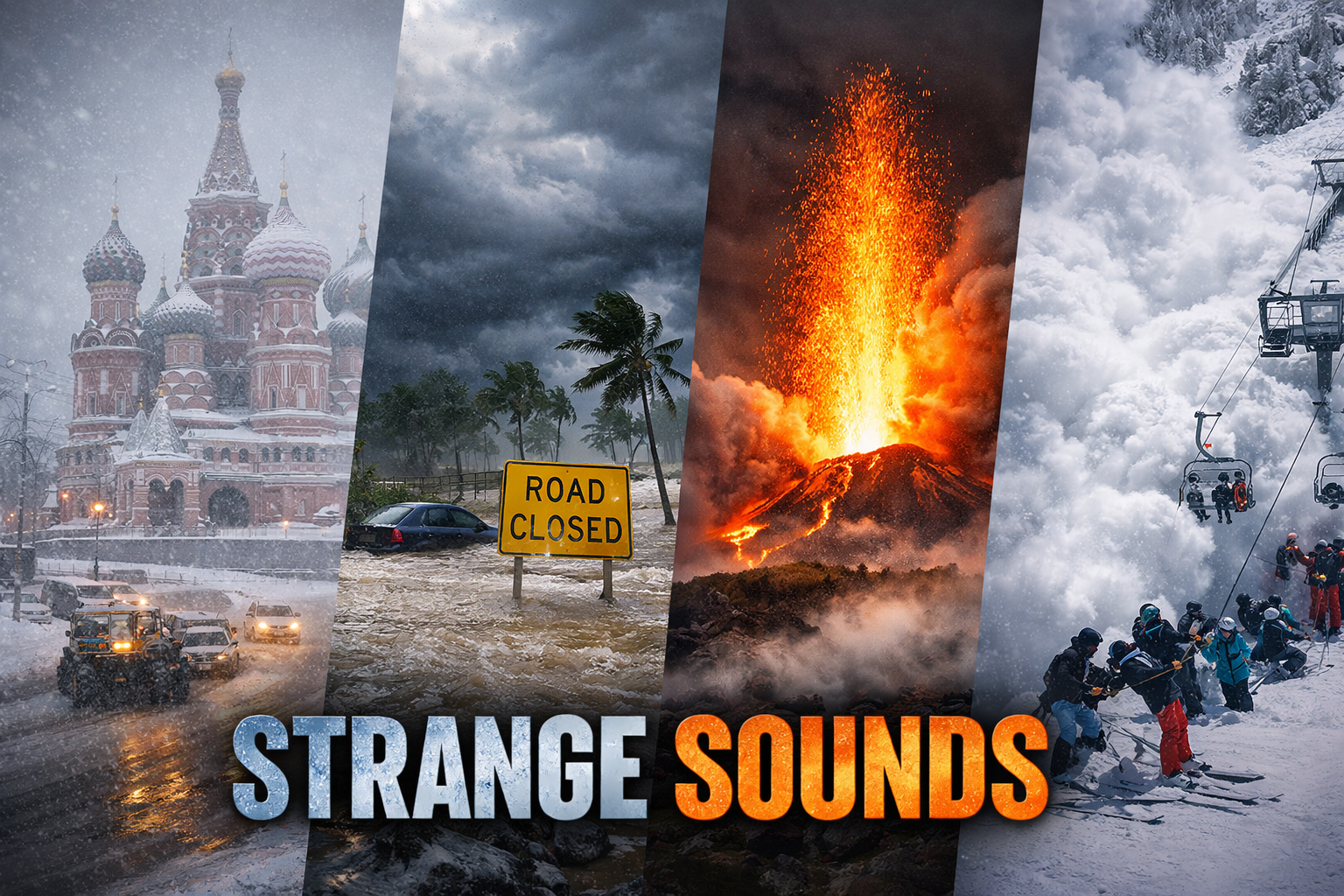
In 48 hours, the planet delivered snow paralysis, lava fountains, deadly dust storms, avalanche blasts, seabird die-offs — and a reminder that Earth is not stable. It is dynamic.
TL;DR — What Just Happened
- Moscow received 70% of its average monthly snowfall in 24 hours
- California faced simultaneous flooding and Sierra blizzards
- 85 mph winds in Colorado caused a deadly “brownout” pile-up
- Alpine avalanche danger hit 4/5 (High)
- 10,000+ seabirds washed ashore after severe Atlantic storms
- Kīlauea launched lava 1,300 feet into the air
- Scientists announced a molecule that stores solar heat for months
Different continents. Same volatility.
❄️ The Planet Is Having a Weather Episode
Within a single 48-hour window, multiple extreme weather and geological events unfolded across different continents. These were not connected in a single meteorological system — but they reveal a broader pattern of intensification.
More snow in shorter bursts.
More water in shorter windows.
More wind in narrower corridors.
More volatility compressed into smaller timeframes.
Earth’s atmosphere is holding more energy. And energy must move.
🇷🇺 Moscow Buried Under Hyper-Concentrated Snowfall
A powerful winter storm dumped nearly 70% of Moscow’s average February snowfall in just one day. Flights were grounded. Traffic froze. Infrastructure strained.
Snow is normal in Russia.
Snowfall compression at that scale is not.
When precipitation loads into short bursts, removal systems fail. That’s when “normal winter” becomes disruption.
The Moscow Time: Winter Storm Brings Heavy Snow and Disrupts Travel in Moscow
🌊 California: Flood Below, Blizzard Above
Pacific storm systems hammered California with heavy rainfall while simultaneously burying the Sierra Nevada in extreme snowfall.
Atmospheric rivers transported enormous volumes of moisture inland.
- Low elevations: flooding
- Mid elevations: infrastructure stress
- High elevations: avalanche risk
This is hydrological whiplash — too much water and drought recovery happening at the same time.
FoxWeather: Multiple searches underway as monster storms slam California with rounds of heavy rain and feet of snow
🌪️ Colorado’s Deadly Brownout
85 mph winds lifted massive dust plumes across highways, reducing visibility to zero in seconds.
Over 30 vehicles collided. Five people died.
This was not snow. Not rain. Not fog.
It was airborne earth.
Brownout events are increasing in semi-arid regions where soil dries and wind events intensify. They are sudden, disorienting, and often fatal.
WSJM: 5 dead in pile-up crash in Colorado involving over 30 vehicles, including multiple semis: Police
🏔️ Avalanche Powder Cloud Engulfs Ski Lift
In Italy, avalanche risk reached 4/5 (High). Video captured a powder cloud blasting through a ski lift corridor.
When snowpack layers destabilize under rapid loading and temperature swings, gravity wins.
Mountains do not negotiate. Learn more in our landslide and mudslide pillar.
🐧 10,000+ Dead Seabirds After Atlantic Storms
Marine heatwaves and storm intensification have been increasing in the North Atlantic over the past decade.
Puffins and seabirds across the UK, France, Spain, and Portugal collapsed from starvation after violent marine storms disrupted feeding cycles.
Rougher seas reduce hunting success.
Extended storm patterns break migration timing.
Energy budgets fail.
The oceans are not calm systems anymore.
🌋 Kīlauea Reminds Us the Crust Is Thin
Hawaii’s Mount Kīlauea erupted again — its 42nd eruptive episode since December 2024.
- Lava fountains: 1,300 feet
- Plume height: 35,000 feet
- Duration: ~10 hours
This is not unusual for Kīlauea. But frequency reminds us that Earth’s crust is an active membrane over moving heat. Learn more in our Hawaiian Volcanoes and the Hotspot pillar.
🌐 Reality Is Still Weird
While the planet moved, society layered on its own chaos:
- A wolfdog entered a women’s Olympic ski race
- A mysterious 1872 stone artifact still defies explanation
- Lawmakers advanced a bill to “ban chemtrails”
- A hazing video revealed 56 blindfolded pledges in a basement
- Wildlife rebounded in the Marshall Islands after rat removal
Storm planet outside.
Layer cake reality inside.
Read today’s whole newsletter here with amazing videos and pictures here:
Is This Climate Change?
Individual storms are weather.
Patterns of increasing intensity are climate signals.
Warmer air holds more moisture.
Warmer oceans feed stronger storms.
Rapid swings increase instability.
Not apocalypse.
Not collapse.
But acceleration.
FAQ
Why are extreme weather events becoming more intense?
Warmer atmospheric and ocean temperatures allow more energy and moisture to accumulate in systems, leading to heavier precipitation, stronger storms, and sharper variability.
What is a brownout?
A brownout occurs when high winds lift dense dust or soil, reducing visibility to near zero and creating sudden hazardous driving conditions.
Is Kīlauea’s eruption dangerous?
Kīlauea is one of the world’s most monitored volcanoes. Current activity is localized and expected behavior for this volcano.
Can Molecular Solar Thermal storage replace batteries?
It is not a direct battery replacement but may complement energy systems by storing heat for long periods without energy loss.
The Bottom Line
Snow.
Flood.
Dust.
Avalanche.
Lava.
Dead seabirds.
Not connected by one storm.
Connected by volatility.
Earth is not unstable.
It is dynamically adjusting.
And we are inside the system.