
For seven hours, part of the sky over El Paso, Texas quietly transformed into something else entirely.
Not closed for weather.
Not restricted for VIP travel.
Not rerouted for emergencies.
Instead, it became classified national defense airspace — with authorization to intercept aircraft using deadly force if necessary.
A modern American city of nearly 700,000 people briefly existed under rules normally reserved for war zones, nuclear facilities, or presidential protection.
Then, just as suddenly, the restriction vanished.
No explanation.
No press conference.
No follow-up.
TL;DR — El Paso Airspace Shutdown Explained
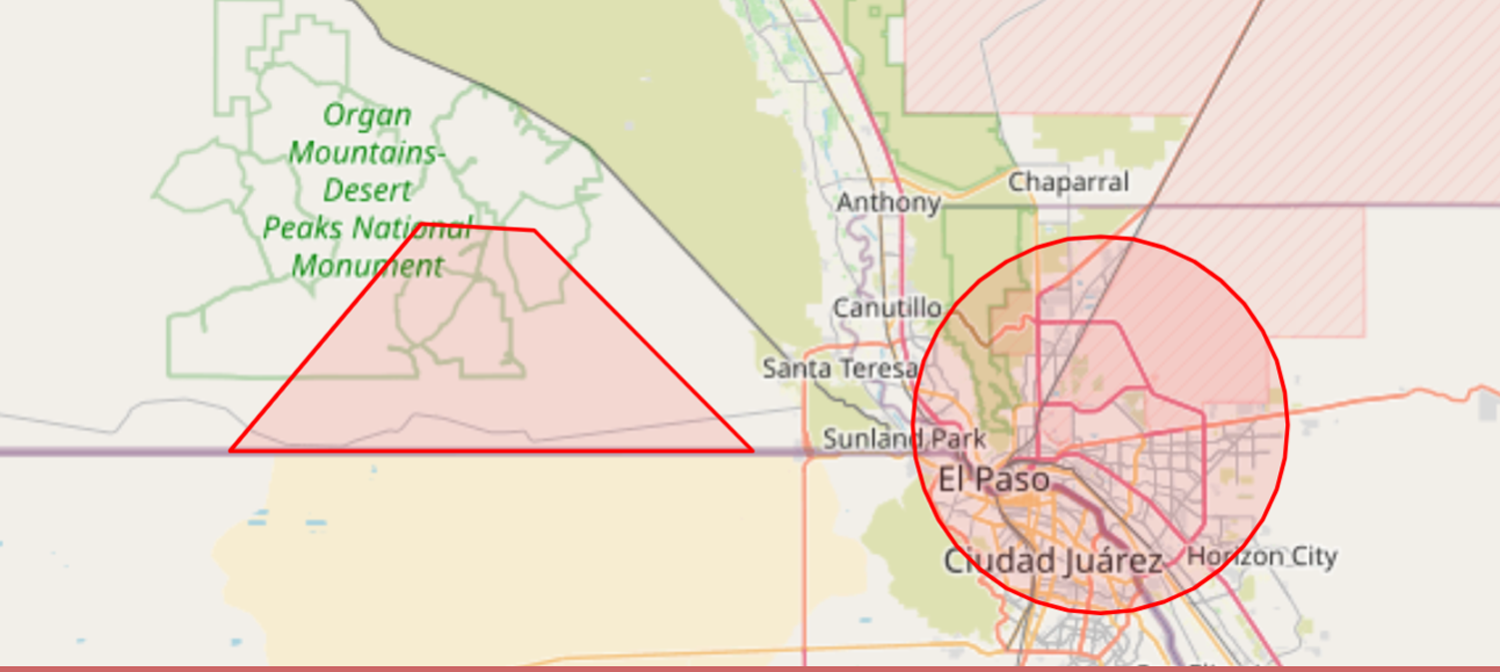
- The FAA imposed a Temporary Flight Restriction (TFR) over El Paso, Texas.
- The restriction covered a 10-mile radius from surface to 18,000 feet.
- The airspace was classified as national defense territory.
- Military aircraft were authorized to intercept intruders with deadly force.
- No official explanation has been provided.
- Possible reasons include military testing, drone threats, or defense system deployment.
What Makes This Airspace Shutdown So Unusual
Temporary Flight Restrictions (TFRs) are common. They protect wildfire zones, major events, or presidential travel.
But classification as national defense airspace is different.
This designation allows military aircraft to actively enforce the restriction — including interception and, under extreme conditions, use of force.
It transforms civilian airspace into something closer to a controlled military zone.
Such measures are typically reserved for situations involving:
- Military defense testing
- Sensitive intelligence operations
- High-risk aerial threats
- Protection of strategic assets
Yet during the restriction, daily life continued normally on the ground.
Border crossings remained open.
Road traffic flowed.
Civilian life continued.
Only the sky was different.
The Rise of Drone Warfare and Border Surveillance
One unofficial explanation involves increasing use of drones near the U.S.–Mexico border.
In recent years, both criminal organizations and government agencies have deployed drones for surveillance, transport, and reconnaissance.
Some drones now operate at altitudes and ranges previously reserved for aircraft.
Restricting airspace allows defense systems to operate freely without civilian interference.
It also allows radar, interception systems, and electronic countermeasures to operate at full capability.
The Quiet Expansion of Invisible Infrastructure
Modern infrastructure increasingly exists in invisible layers.
Satellites monitor Earth continuously.
Radar systems map skies in real time.
Algorithms analyze movement patterns.
Most of this operates silently.
Only occasionally does it surface — as a sudden restriction, unexplained closure, or brief disruption.
Moments like the El Paso shutdown reveal that beneath ordinary life exists an active, constantly adjusting security architecture.
Most of the time, people never notice.
Until they do.
Meanwhile, the Universe Continues Moving
While airspace restrictions quietly appeared over Texas, something else entered our skies.
A comet older than humanity itself returned from deep space.
And scientists began exploring whether solar storms might influence earthquakes on Earth.
Reality remains interconnected — from the upper atmosphere to the Earth’s crust.
Highlights from Today’s Strange Sounds Newsletter
- A million-year-old comet returns: Comet Wierzchoś entered the inner solar system after traveling longer than humans have existed.
- Solar storms may influence earthquakes: Researchers propose electrical coupling between space weather and Earth’s crust may affect fault stability.
- Japan freezes under record cold: Historic snowfall and freezing temperatures have killed dozens and disrupted infrastructure nationwide.
- Pokémon GO mapped Epstein Island: User-submitted game data revealed how digital mapping reaches even restricted locations.
- China advances human spaceflight: New rocket escape system testing brings independent crew capability closer.
- Surveillance continues expanding: Consumer devices increasingly function as passive data-collection infrastructure.
- Buddhist monks walked 2,300 miles: A rare reminder that not all human movement is driven by algorithms.
Frequently Asked Questions About Airspace Shutdowns
- What is a Temporary Flight Restriction (TFR)?
- A TFR is a restricted airspace zone created to protect people, infrastructure, or national security. Aircraft are prohibited or limited from entering the area.
- Why classify airspace as national defense territory?
- This classification allows military enforcement and protection of sensitive operations, assets, or potential threats.
- Is this dangerous for people on the ground?
- No. These restrictions affect aircraft only. They are preventative measures designed to increase safety and security.
- Why would authorities not explain the restriction?
- Military or intelligence operations often remain classified to protect security capabilities and prevent interference.
- Do airspace shutdowns happen often?
- Routine TFRs are common, but national defense classifications over major cities are rare.
Read the Full Strange Sounds Newsletter
This article is part of the Strange Sounds daily newsletter — tracking natural disasters, space weather, strange phenomena, and the quiet signals shaping our world.
Read the full newsletter here →
Support Strange Sounds
Independent reporting depends on readers like you. Donate via PayPal, Support via DonorBox
Subscribe for daily strange reality updates