
Yellowstone National Park is rising again.
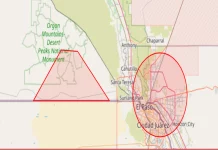
A massive uplift zone stretching 19 miles across is expanding along the northern rim of Yellowstone’s caldera.
Satellite radar, seismic instruments, and GPS monitoring confirm the cause:
Magma is moving beneath the surface.
Not erupting.
Not approaching eruption.
Simply shifting.
And that movement confirms something fundamental:
Yellowstone is alive.

TL;DR: Yellowstone Bulge Explained
- A 19-mile-wide uplift zone is rising along Yellowstone’s northern caldera rim
- Caused by magma movement about 9 miles underground
- Magma chamber is only 5–15% molten
- Alert level remains NORMAL / GREEN
- Similar uplift events occurred in 1996–2004 and 2004–2020
- No eruption warning signs detected
Yellowstone Is Rising Because Magma Is Moving Underground
The Yellowstone supervolcano contains one of the largest volcanic systems on Earth.
Beneath the park lies a vast magma reservoir extending miles underground.
When magma redistributes, it creates pressure changes.
That pressure pushes the crust upward.
This process is called ground deformation.
And it is exactly what scientists are now observing.
Current uplift measures approximately one inch since 2025 — a small but scientifically significant change.
These measurements are detected using:
- GPS monitoring stations
- Satellite radar interferometry (InSAR)
- Seismic monitoring networks
These tools allow scientists to observe geological processes in real time.
Yellowstone Has Done This Before
This is not the first time Yellowstone has risen.
Similar uplift cycles occurred during:
- 1996–2004
- 2004–2020
- And now again since 2025
These cycles represent pressure adjustments inside the magma system.
Think of it as the volcano breathing.
Pressure builds.
Pressure releases.
The surface rises.
Then settles.
Yellowstone Is Not Close to Erupting
Despite dramatic headlines, Yellowstone’s current activity is normal.
Key scientific facts:
- Yellowstone has erupted three times in 2.1 million years
- The last eruption occurred 631,000 years ago
- The magma chamber is mostly solid rock
- Alert level remains NORMAL / GREEN
If Yellowstone were approaching eruption, scientists would observe:
- Rapid uplift
- Intense earthquake swarms
- Gas emission spikes
- Surface heating
None of these warning signs are present.
Yellowstone Is a Living Geological System
Volcanoes are not static.
They are dynamic systems driven by heat, pressure, and movement deep inside Earth.
Yellowstone’s uplift is evidence of that internal activity.
It confirms the magma system remains active.
But activity does not equal eruption.
It simply means the system is alive.
Other Signals From Today’s StrangeSounds Newsletter
Italy’s Lovers’ Arch Collapsed Into the Sea
After standing for centuries, Italy’s iconic Lovers’ Arch collapsed due to erosion and storms.
No earthquake.
No explosion.
Just slow geological decay reaching its final moment.
Earth constantly reshapes itself.
Massive Sinkhole Expands in Indonesia
A growing sinkhole in Central Aceh is swallowing farmland.
Underground erosion and unstable soil caused the collapse.
The ground appears permanent.
Until it isn’t.
Comet 29P Erupted and Formed a Spiral Plume
The comet brightened dramatically and ejected a spiral plume of hydrocarbons and carbon dioxide.
Cryovolcanic eruptions like this reveal that even frozen objects in space remain active.
The Egg Nebula Shows How Stars Die
Hubble images reveal the outer layers of a dying star expanding into space.
Stars evolve.
Destabilize.
Collapse.
Just like planets.
and more…
Read the Full Edition on Substack
This article is an excerpt from today’s Strange Sounds newsletter. The full edition includes the complete roundup, extra links, and daily “reality check” fuel.
👉 Read the full edition:
Yellowstone Is Rising Again — But Not for the Reason You Think…
FAQ: Yellowstone Supervolcano Uplift
Is Yellowstone about to erupt?
No. Yellowstone’s alert level remains NORMAL and there are no eruption warning signs.
Why is Yellowstone rising?
Magma movement beneath the surface causes pressure that lifts the crust.
Is this unusual?
No. Yellowstone has experienced multiple uplift cycles over recent decades.
How likely is a Yellowstone super-eruption?
Extremely unlikely in any given year.
Would scientists know before Yellowstone erupts?
Yes. Warning signs would appear months or years in advance.
Stay Ahead of Earth’s Changes
🛰️ Strange Sounds is reader-supported.
If you value independent reporting on weird phenomena, extreme weather, and quiet signals, you can support the archive via PayPal or Donorbox.
📰 Subscribe for daily chaos
Get the Strange Sounds newsletter — a curated digest of natural disasters, strange science, and the planet updating itself in real time.
👉 Subscribe on Substack