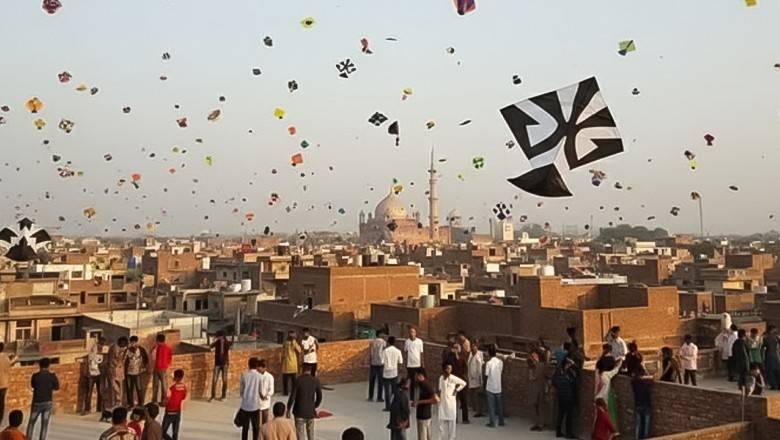
Lahore’s rooftops are filling up again. Drums echo through the old city. And the sky is turning into a zig-zag warzone of color. After a long ban, Basant — Lahore’s famous kite festival — is quietly returning.
It’s one of those human traditions that contains everything at once: joy, community, competition, nostalgia… and a very real risk of injury or death. Basant isn’t “just kites.” It’s rooftop crowds, dense power lines, razor strings, and a whole city looking upward at the same time.
TL;DR — Why Basant Is Back (and Why It’s Controversial)
- Basant is Lahore’s traditional kite-flying festival, celebrated from rooftops across the city.
- It was banned after repeated injuries and deaths linked to sharp kite strings, falls, and other hazards.
- It’s returning because of cultural pressure + nostalgia and a generation that never experienced it.
- The safety question is simple: can you bring back the joy without bringing back the body count?
What Is Basant?
Basant is a springtime celebration best known for kite flying over Lahore, especially in and around the old city. Families and friends gather on rooftops, launch kites, and compete to cut other kites out of the sky.
In practice, Basant turns Lahore into a vertical amphitheater: rooftops become stages, the sky becomes the arena, and the whole city becomes the audience. For many locals, it’s less an “event” than a memory of Lahore being fully alive.
Why Was Basant Banned?
The danger isn’t the kite. It’s the string. Competitive kiting often involves razor-sharp or glass-coated strings designed to cut opponents’ lines. Add tightly packed rooftops, narrow streets, motorcycles, electrical wiring, and crowds looking up — and the risk multiplies fast.
Common hazards reported around Basant include:
- Severe cuts from sharp strings (especially to riders and pedestrians)
- Falls from rooftops during crowded celebrations
- Electrocution when strings tangle with power lines
- Other unsafe “celebration add-ons” that authorities struggle to control
Why Is Basant Returning Now?
Time changes the public mood. Traditions have gravity. And bans don’t erase desire — they often compress it.
Part of what makes this return feel explosive is generational: many young adults have never experienced Basant. Meanwhile elders remember it as a defining piece of Lahore’s identity — not a headline, but a season.
So the city drifts back toward the ritual: kites reappear in markets, rooftops fill again, and the sky starts doing that old Basant thing — zig-zagging, circling, soaring.
Can Basant Be Celebrated Safely?
If Basant is returning for good, safety becomes the real test: not whether people want it (they do), but whether a city can reduce risk without deleting the tradition.
Risk-reduction levers (in theory) include:
- enforcing bans on dangerous string materials
- limiting rooftop crowd density in high-risk zones
- public guidance: distance from power lines, safe viewing zones, safer kite practices
- emergency response readiness (because the sky is not a controlled environment)
The reality is harder: Basant lives in thousands of rooftops at once. A festival that happens everywhere is a festival that’s hard to control.
Still, there’s a reason people want it back. In a world that’s increasingly digital, Basant is aggressively physical: hands on string, eyes on sky, friends shouting, families laughing. It’s community made visible.
Today’s Strange Sounds Digest
Today’s edition is global weirdness in full-spectrum: satellites watching ice tear, alcohol turning brains into neighborhood group chats, red streetlights for bats, jet fuel shortages, deep-sea creatures, and a Martian rock hiding more water than expected.
In today’s edition
- Discord face scans / ID verification: “teen mode by default” until verified — because the internet always asks for more data.
- Lake Erie ice crack from space: GOES imagery captures a massive fracture slicing through lake ice.
- Alcohol and brain connectivity: a single session can reduce global efficiency and fragment networks.
- Red streetlights in Denmark: wildlife-friendly LEDs to reduce disruption (especially for bats).
- Yeast producing ashwagandha compounds: engineered microbes brewing “plant medicine” like beer.
- Deer dragging a severed head: mating season = nature’s HR violation.
- Cuba jet fuel warning: airlines told fuel could run out within 24 hours — tourism meets logistics.
- Private jet exodus after the Super Bowl: nothing says “together” like synchronized luxury emissions.
- “Black Beauty” meteorite water: new scanning suggests more hidden water in ancient Martian rock.
- Giant phantom jelly off Argentina: a rare, bus-sized deep-sea sighting.
- Sunspot 4366 + Comet MAPS: continued flare risk and a sungrazer that may or may not survive.
Frequently Asked Questions About Basant
- What is Basant in Lahore?
- Basant is a spring kite-flying festival celebrated across Lahore, with people gathering on rooftops to launch kites and compete by cutting rivals’ strings.
- Why was Basant banned?
- It was banned after repeated injuries and deaths linked to dangerous kite strings, falls from rooftops, and other festival-related hazards.
- Why is Basant considered dangerous?
- The biggest risks come from sharp string materials, dense rooftop crowds, power lines, and people moving through streets while looking up or riding motorcycles.
- Is Basant returning officially or informally?
- Reports suggest the festival is returning in a quieter, informal way — with rooftop kite flying and local celebration building momentum again.
- Can Basant be celebrated safely?
- Safety depends on enforcement against dangerous string materials, crowd control in high-risk areas, public guidance, and strong emergency response — but the decentralized nature of the festival makes risk management difficult.
Read the Full Edition
This article is an excerpt from today’s Strange Sounds newsletter. The full edition includes the complete roundup, extra links, and daily chaos.
👉 Read the full newsletter edition here:
❤️ Support Strange Sounds
If you value independent reporting on strange phenomena and quiet signals, you can support the archive: PayPal or Donorbox.
📰 Subscribe for daily chaos
Get the Strange Sounds newsletter — curated weirdness, no anesthesia.
👉 Subscribe